Overview
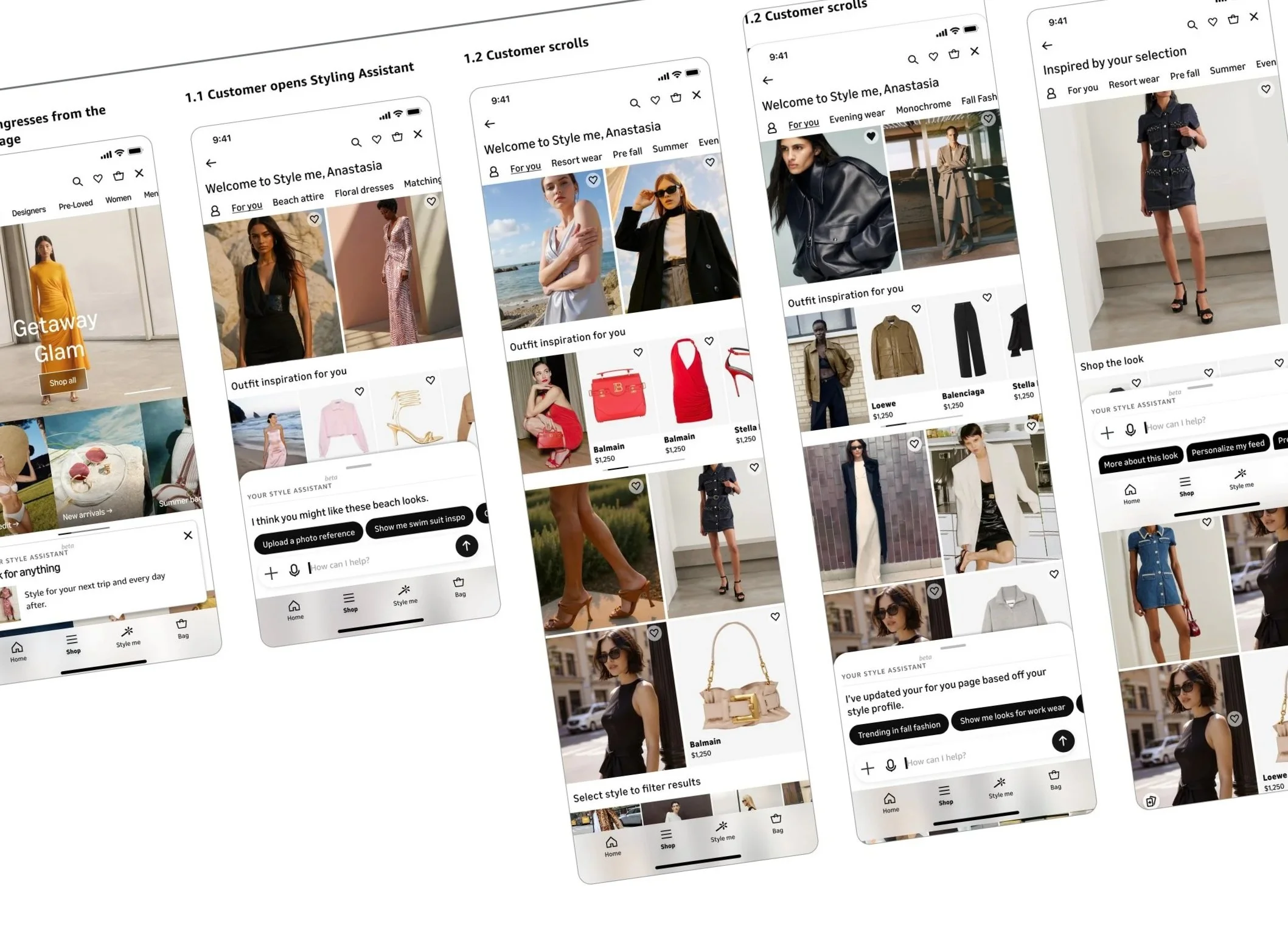
Pose is an AI-driven styling assistant that helps shoppers discover outfits based on their preferences, goals, and visual inspiration. I led a rapid, two-week sprint to define the initial end-to-end experience, shape the interaction model, and build a cohesive visual system that made AI styling feel intuitive, credible, and elevated for the MLP launch. Despite the accelerated timeline, I delivered a complete foundation the team could scale into future iterations, including chat flows, look generation paths, and UI patterns that balanced speed with craft.
Project Pose — AI Styling Assistant
Role: Lead UX Designer
Project Type: 2-Week Sprint → Initial Experience Design
Platform: Mobile
Focus: AI-powered fashion styling and personalized outfit recommendationsr
Team: Design, Product, Applied Science, ML, Fashion, Research
Problem
Customer often know the look they want, but not how to describe it or where to begin. Traditional browse patterns were not supporting modern discovery behaviors:
Customers needed styling inspiration, not just product listings.
Many struggled to describe style preferences in text.
Existing discovery tools felt generic, not personalized.
Inspiration needed to feel editorial—not algorithmic.
The challenge:
How do we make AI styling feel effortless, trustworthy, and fashion-forward?
Iterative Design
I broke the UX into small, testable pieces that the team could build and validate quickly. Instead of designing the entire experience upfront, I focused on delivering “just enough” UX per day to unblock engineering starting with the core chat flow, then layering in inspiration inputs, look refinement, and generation states.
Prototyping Early and Often
By the end of Week 1, I produced lightweight prototypes that explored different conversational patterns, onboarding paths, and look-generation layouts. These prototypes helped the team visualize the interaction model early and align on feasibility with science and engineering.
User Research Within the Sprint
I partnered with research to recruit fast-turn users and test the early prototypes mid-sprint. This gave us immediate insight into where users felt confused, where trust broke down, and what signals helped them understand the AI’s capabilities. We refined prompts, clarified guidance, and simplified the visual hierarchy based on this feedback.
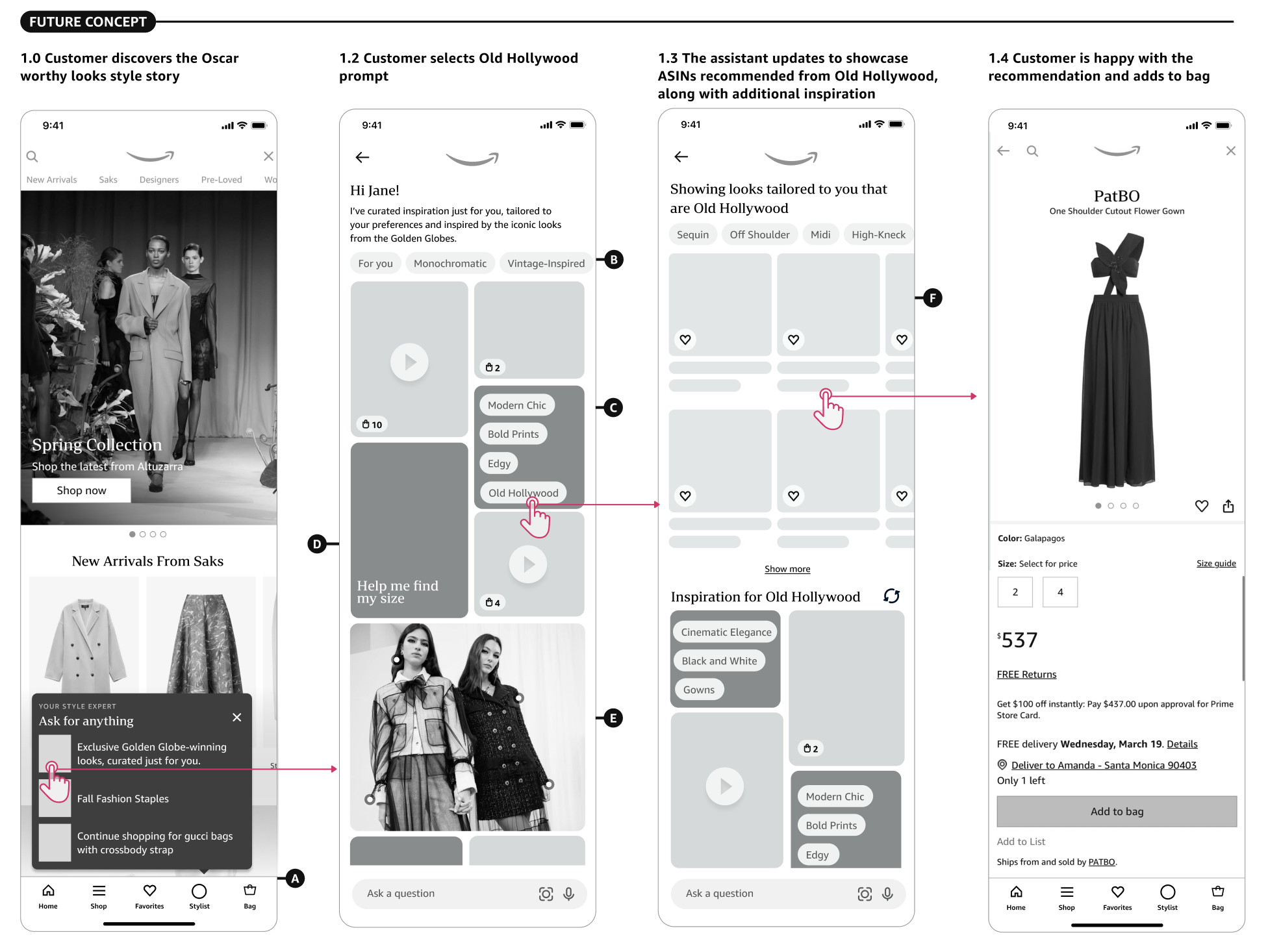
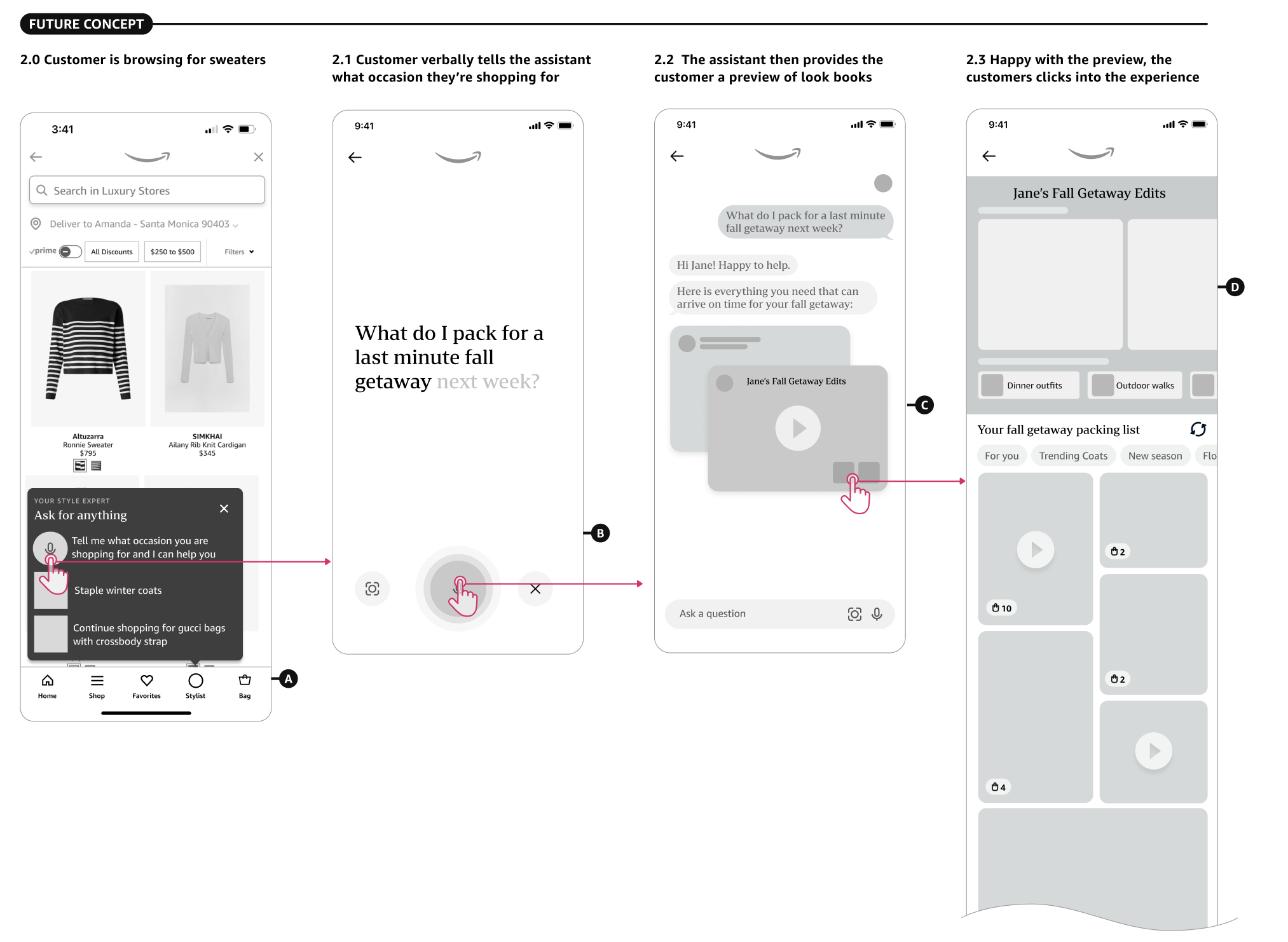
Rapid wireframes
.
High-Fidelity Mockups
Once the core flows were validated, I moved into high-fidelity design to elevate the experience into something that felt editorial, modern, and aligned with Amazon Fashion. I explored modular card systems, refined the generation states, and introduced clearer typographic hierarchy to make looks feel polished and shoppable.
These high-fi assets became essential for alignment with science and engineering, and they were used in leadership reviews to show the vision and buy-in for future versions of Pose. Each screen was annotated for behavior, content rules, and interaction states so the team could build with clarity.
Leadership Reviews
Throughout the sprint and post-launch work, I presented regularly to directors and senior leadership across Fashion, GenAI, and North America Stores. These reviews were critical for aligning on scope, communicating risks, and illustrating how the assistant could evolve beyond MLP.
My high-fidelity mocks, end-to-end flows, and prototypes helped leadership understand the potential of AI styling. These reviews unlocked additional resourcing, allowed us to expand beyond the minimal launch, and set the direction for what ultimately became Pose 2.0.
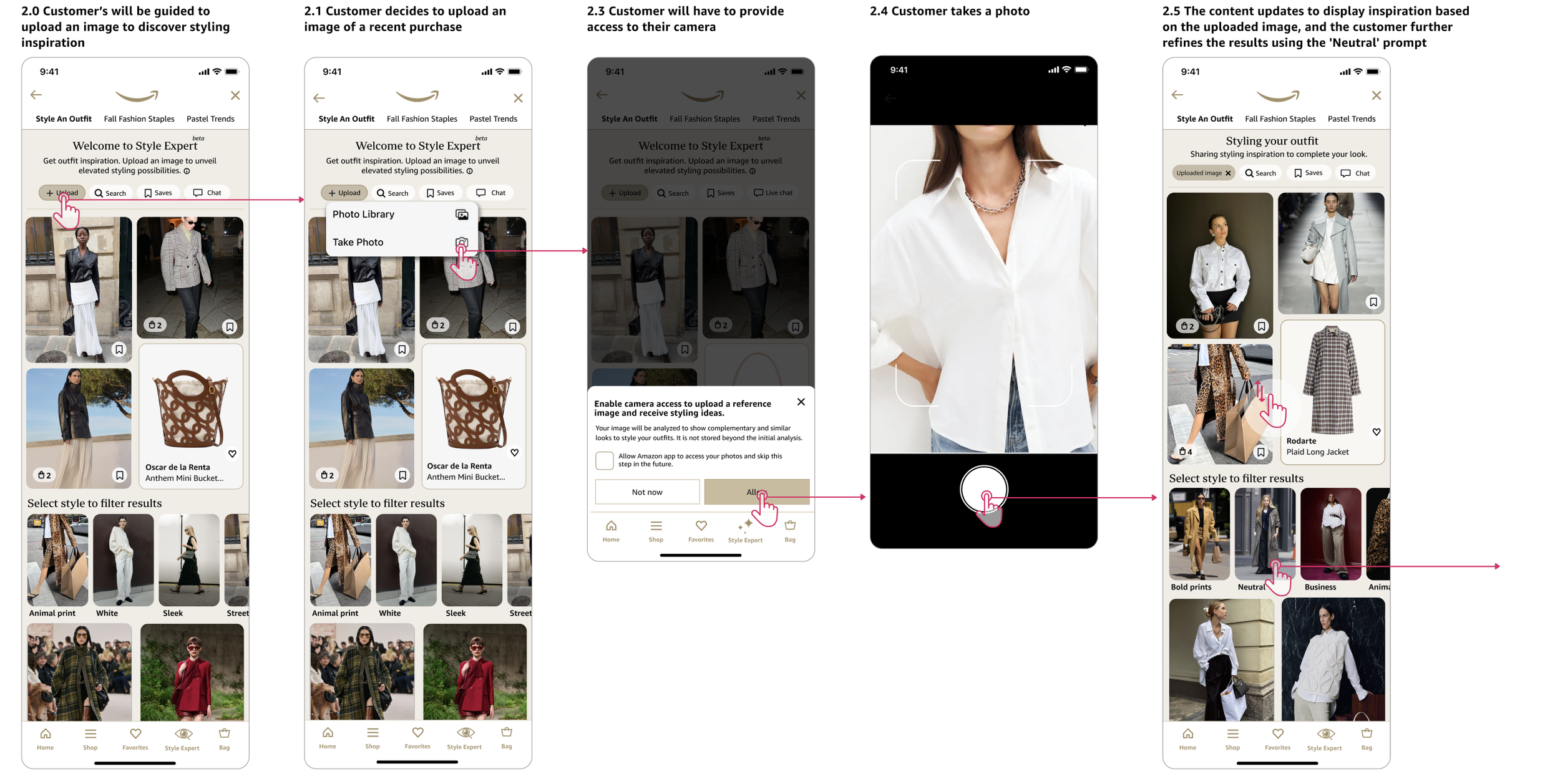
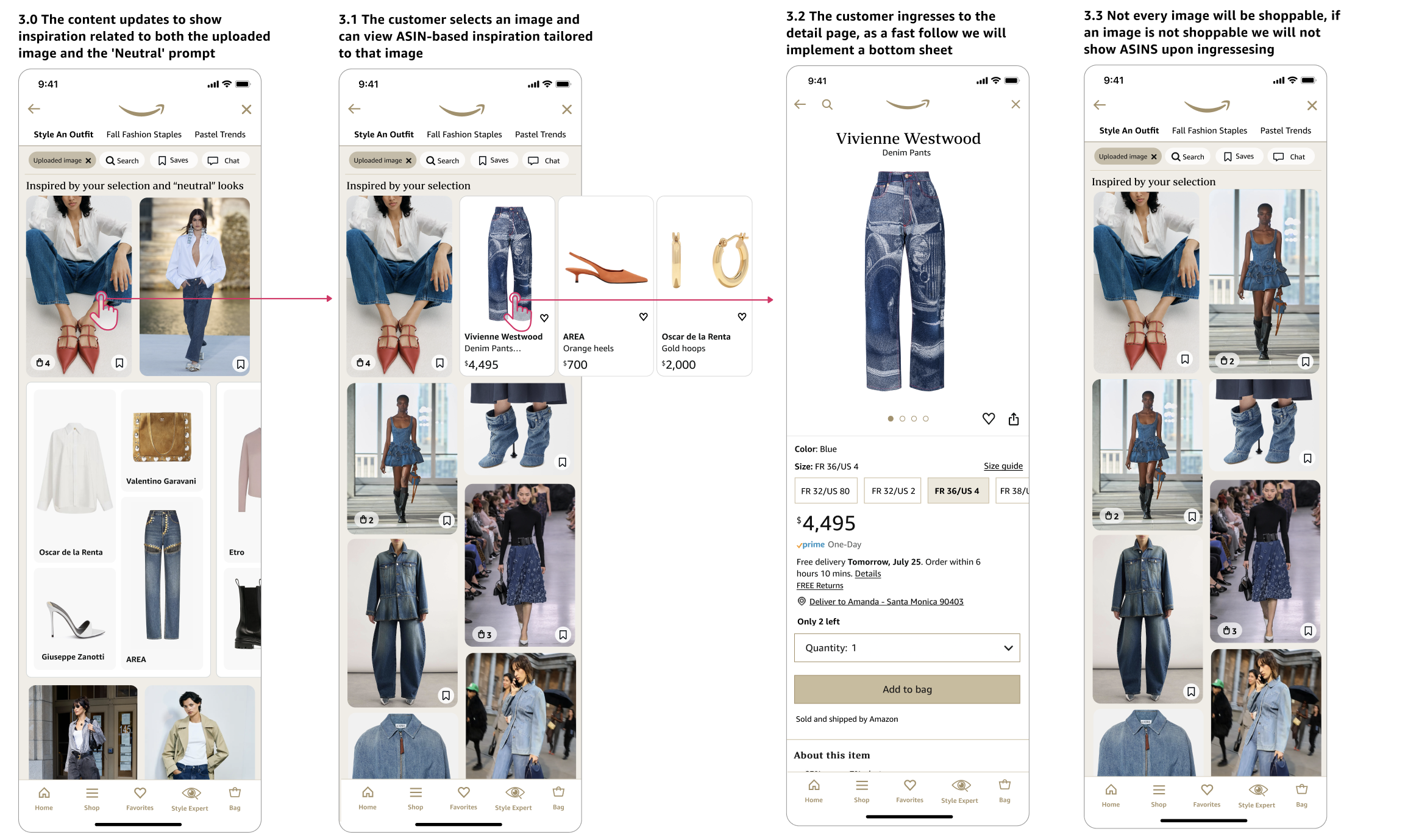
Continued Iteration on North Star Concept
The two-week MLP sprint established a strong foundation that enabled Pose to scale quickly. The ongoing post-launch work transformed it from a minimal assistant into a more refined, intelligent styling system—laying the groundwork for what eventually became Pose 2.0 and inspired future AI-powered styling initiatives across Fashion.
Impact
The two-week MLP sprint established a strong foundation that enabled Pose to scale quickly. The ongoing post-launch work transformed it from a minimal assistant into a more refined, intelligent styling system—laying the groundwork for what eventually became Pose 2.0 and inspired future AI-powered styling initiatives across Fashion.